From a slow leak behind the drywall to a full basement flood, Cope property owners call Aqua Guard Water Damage because we show up with the right gear the first time — no guesswork, no upsells at the door.
Call +1-844-578-1604 Now
Aqua Guard Water Damage has spent years pulling water out of Cope basements, crawl spaces, and commercial units, and that hands-on history shows in how fast our crews assess a loss. We know which Cope neighborhoods sit on older clay pipe, which developments have a history of sump failures, and which zip codes flood first when storm drains back up.
Being local to Cope means our estimators know the going rate for drywall and flooring replacement in your area, so the quote you get reflects your market instead of a national average that never quite matches your invoice.
We also carry direct experience working alongside insurance adjusters, so the documentation we generate on day one is already formatted the way most carriers expect to see it.

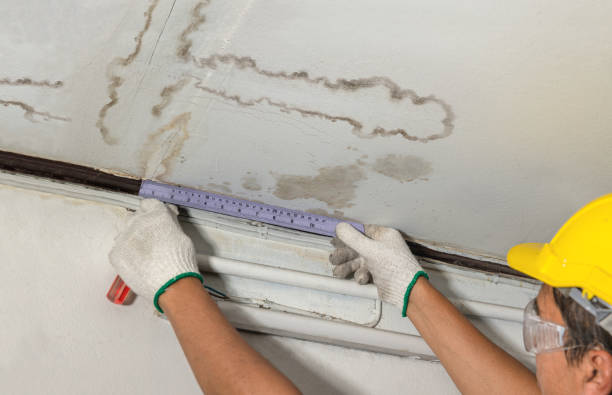
Ceiling stains near a bathroom or kitchen almost always trace back to a plumbing failure rather than a roof leak, which means the source is often closer and easier to fix than homeowners assume.
If opening windows and running a fan doesn't clear the smell within a day, the moisture source is still active and needs professional extraction, not just ventilation. A smell that returns after cleaning is a strong sign the moisture is still present.
Tile that suddenly sounds hollow when you tap it often means the mortar bed underneath has been sitting in moisture long enough to lose adhesion. That hollow sound rarely resolves on its own.
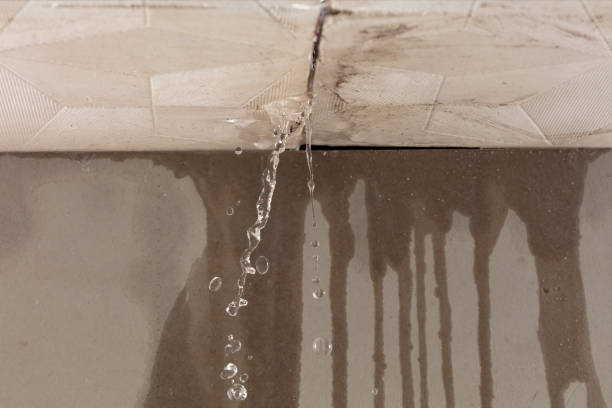
An unexplained jump in your water bill is frequently the first sign of a slab leak or a failing supply line long before any visible water appears. Catching it at this stage is far cheaper than waiting for a visible flood.
Wallpaper that lifts at the seams after being fine for years is often a sign that humidity or a slow leak has changed the moisture level inside that wall.
Dark spotting in grout lines or around window frames is often the first visible sign of a moisture problem that's been developing for weeks.
Our Water Damage Repair process covers every stage of a water loss, from the first extraction pass to the final coat of paint, so you're never left coordinating separate contractors mid-project.
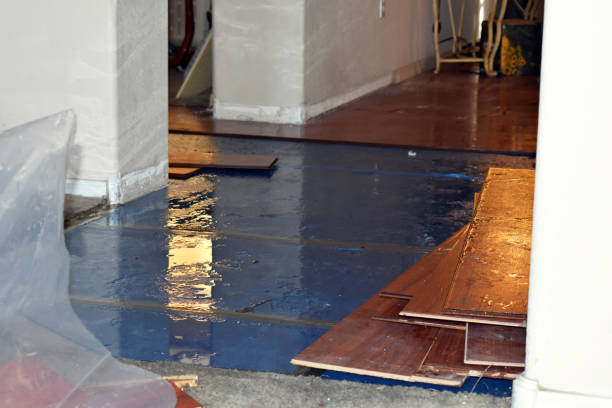
We prioritize extraction speed above everything else in the first hour, because every additional hour standing water sits raises the odds of secondary damage to subfloors and framing.
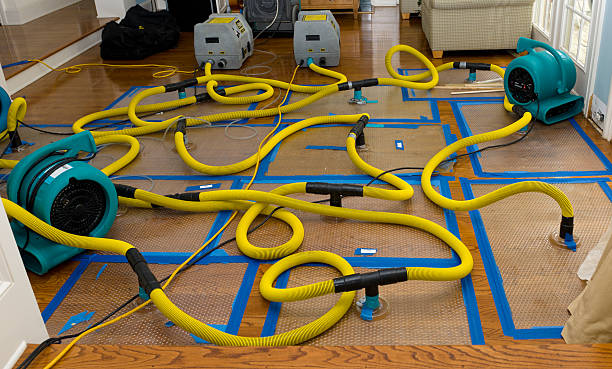
Equipment placement isn't guesswork; it's calculated from psychrometric readings taken at the start of the job and adjusted daily as conditions change.
Our sewage cleanup protocol follows IICRC S500 contamination standards, isolating the affected area, removing unsalvageable materials, and disinfecting every surface that had contact with blackwater.
Because mold can establish in as little as 48 hours, our drying timeline is built around beating that window rather than treating mold prevention as an afterthought.
We handle everything from replacing water-damaged drywall and insulation to refinishing floors, so the property is restored to pre-loss condition under one contract instead of three.
We inventory and pack out contents that need to leave the affected area during drying, then coordinate their return once the space is verified dry and repairs are complete.


A real person answers, gathers the details of your water loss, and routes the closest available crew immediately.
The assessment sets the entire plan — skipping it or rushing it is how jobs end up with hidden moisture pockets months later.
We set drying equipment based on the specific moisture readings taken during assessment, not a generic placement pattern.
We re-test every affected area before calling a job complete, then coordinate repairs so you're not left with an open punch list.
Every technician carries IICRC certification and our crews are fully insured for your protection on every job.
Trucks are staged regionally so a crew can typically reach you well before a national chain's call center even finishes your intake form.
Flat-rate pricing means the number we quote is the number you pay, regardless of how long the drying cycle takes.
If a drying target isn't met on the first pass, we extend equipment placement at no extra charge until moisture readings confirm the structure is dry.
If our moisture readings don't hit a safe drying standard on schedule, we keep equipment on site at no additional cost until they do — that's the standard we hold ourselves to.
That same standard applies whether it's a single flooded bathroom or a full commercial loss — the sign-off criteria don't change based on job size.
Call +1-844-578-1604Aqua Guard Water Damage dispatches crews throughout Cope and the surrounding zip codes, including 29038, so response times stay fast no matter which side of town the call comes from.
Coverage isn't limited to the city center — our Cope routes extend out to the surrounding suburbs so outlying addresses aren't treated as an afterthought.

"A pipe burst behind our water heater and the crew here in Cope had extraction units running within 40 minutes of my call. They walked me through the moisture readings every day until it was fully dry."
James R., Cope"What impressed me most was the daily moisture log — I could actually see the numbers improving instead of just being told to trust the process."
Denise M., Cope"Professional from the first phone call to the final walkthrough. They re-tested moisture levels before closing the job instead of just eyeballing it."
Marcus T., Cope"Fast response, clear pricing, and they coordinated directly with my insurance adjuster which saved me a huge headache during a stressful week."
Priya S., Cope"Drying logs were shared with us daily so we always knew exactly where the job stood, not just a vague 'it's drying' update."
Carlos V., Cope"Our commercial unit flooded overnight and they had industrial equipment running before our staff arrived for the morning shift."
Angela F., Cope"The tech explained exactly which boards needed to come out and which ones tested dry enough to keep, so we didn't pay to replace more than necessary."
Tyrone B., Cope"Storm runoff got into our crawl space and the smell alone told us something was wrong. The crew found the vapor barrier had failed and fixed the actual cause, not just the symptom."
Wendy K., Cope